

Alamo Heights ISD in San Antonio has been without internet and Gmail since Monday, with outside forensic specialists helping investigate a districtwide outage that remained unresolved Wednesday morning.
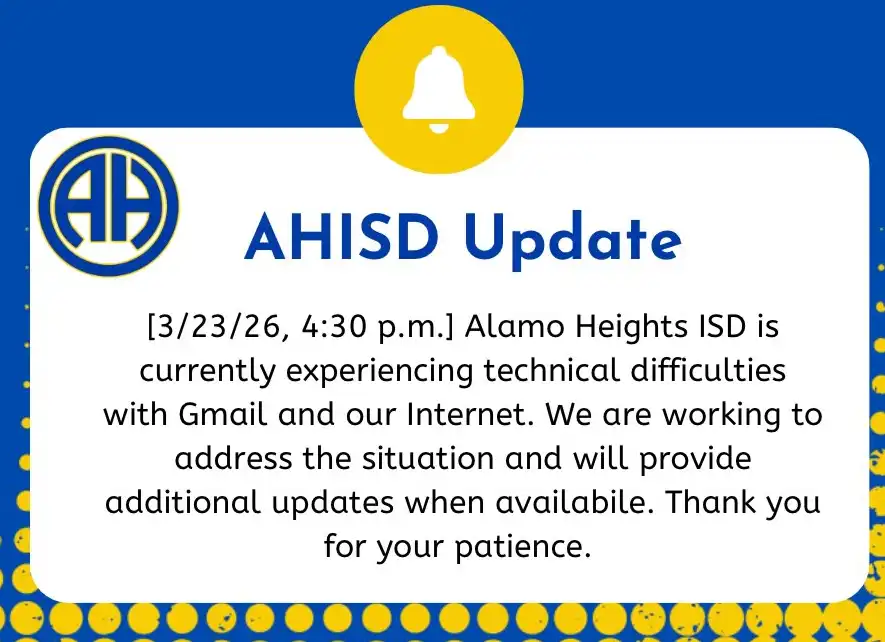
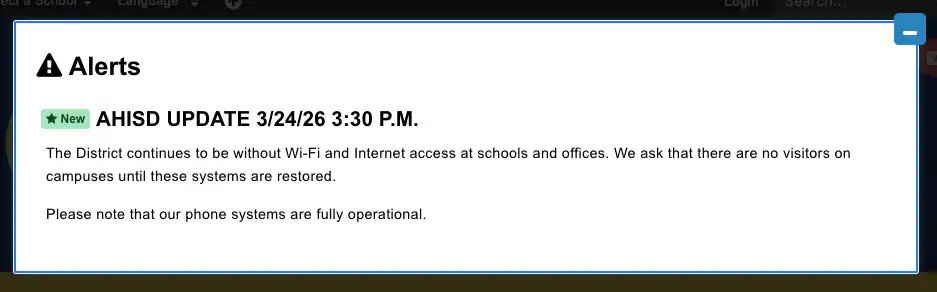
Alamo Heights Independent School District said it began experiencing technical difficulties with Gmail and internet service Monday, then told families in a 4:30 p.m. social media update that the disruption was affecting core systems. A district alert posted at 3:30 p.m. Tuesday said schools and offices continued to be without Wi-Fi and internet access. By Wednesday morning, the district was still offline, according to the San Antonio Express-News and the district’s public updates.
The outage affected school buildings and offices across the district. Officials asked visitors to stay away from campuses until systems are restored, while saying district phone lines remained operational. Spokesperson Julie Ann Matonis told the Express-News that third-party forensic specialists were working with the district’s IT team and that restoration was expected to take several more days.
The district did not respond to an email from DysruptionHub seeking additional details.
The publicly available facts point more strongly to a possible cyber incident than to a routine connectivity problem. The district has brought in forensic specialists, the disruption affected Gmail and internal internet access across the district, and officials have not ruled out phishing or hacking. But no public statement reviewed Wednesday confirmed ransomware, unauthorized access or data theft, so the incident is best described as under investigation rather than as a confirmed attack.
That distinction matters because Alamo Heights ISD was hit by a different kind of outage in December 2024, when multiple Texas districts lost internet and phone service after a third-party fiber cut. In that case, service was restored after the provider-side problem was fixed. More recently, Uvalde CISD, west of San Antonio, publicly confirmed a ransomware attack in September 2025 that forced class cancellations, underscoring the pressure Texas school systems face from cyber threats.

Chip in once
If this reporting helped you, a one-time tip helps cover hosting, tools and future investigations.

Support us monthly
A small monthly pledge keeps independent coverage and our reader tools online for everyone.
The Texas Education Agency has said its K-12 Cybersecurity Initiative was launched to help districts defend against major cyber incidents such as ransomware. Alamo Heights ISD is a five-school district in Bexar County serving about 4,735 students, according to the state district profile.
The Alamo Heights outage fits a familiar pattern in education incidents: schools often begin by calling an event a technical or IT disruption before the picture becomes clearer. San Felipe Del Rio CISD said this month that suspicious email activity caused in-network outages, while Eanes ISD near Austin was later listed by the Qilin ransomware group after a December outage, a claim the district did not confirm. Lehigh Carbon Community College in Pennsylvania likewise described its March event as an IT disruption, but later coverage called it a data breach and the Medusa ransomware group separately posted an unverified claim.
The next questions are whether district leaders clarify the root cause, disclose whether any accounts or records were accessed, and say whether law enforcement or regulators have been notified. Until then, the public-facing impact remains a multi-day instructional and administrative technology outage, with phones still working.


