

Clarksville Independent School District in Northeast Texas reported a districtwide computer and network outage on Nov. 26 and warned it could take days to resolve. Weeks later, a ransomware group posted a claim about the district that officials have not confirmed.
In a “Technology Update” posted that night, the district said “all CISD computers and the district network are experiencing significant difficulties” and told staff and students not to use any computers, laptops or other devices connected to the district network “until further notice.” Comments were disabled on the district’s Facebook post directing readers to the update.
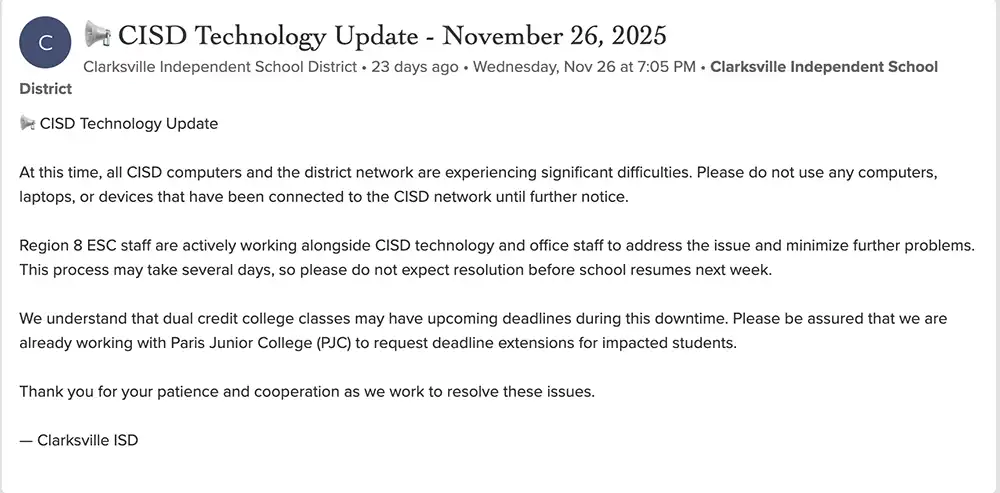
The district said Region 8 Education Service Center was assisting and that it did not expect the issue to be resolved before students returned the following week. It also said it was working with Paris Junior College to extend dual-credit deadlines.
On Dec. 18, the ransomware-tracking website ransomware.live listed “Clarksville ISD” as a victim of a group identified as Interlock. Interlock claimed on its leak site that it stole student and employee information from Clarksville schools, including Social Security numbers and financial records, a claim the district has not confirmed.

Chip in once
If this reporting helped you, a one-time tip helps cover hosting, tools and future investigations.

Support us monthly
A small monthly pledge keeps independent coverage and our reader tools online for everyone.
Clarksville ISD has not publicly attributed the Nov. 26 disruption to ransomware or any cyberattack, and no district statement confirming data theft was located as of Dec. 19. District officials did not respond to requests for comment by publication time. The timing also leaves open whether the Dec. 18 leak-site post reflects the Nov. 26 outage, an earlier intrusion disclosed later, or a separate incident.
Other Texas districts have reported cyber disruptions this year. Valley View ISD in Pharr said in November it was handling a “cybersecurity incident” affecting computer systems and phone lines, while a ransomware group later posted an unverified claim about the district. Uvalde CISD canceled classes for several days in September after it detected ransomware affecting systems it said were critical to campus operations, then later said investigators found no data breach. Santa Fe ISD, near Houston, reported a “cyber event” in late April that disrupted internet and phone service and forced changes to STAAR testing schedules.
Clarksville ISD is a small, rural district in Red River County serving about 529 students, according to federal education data.
Cyber incidents have repeatedly disrupted K-12 operations in Texas in recent years, sometimes causing extended phone and internet outages and raising concerns about potential exposure of student and staff information.


