

University Hospitals in Ohio took systems offline Thursday after detecting unusual server activity, cutting off MyChart access and limiting website services while the health system investigated.
“While there is currently no impact to patient care delivery, certain digital services are offline while we investigate,” a UH spokesperson told Becker’s Hospital Review.
UH said the disconnection was a precaution. In its statement to Becker’s, the health system said digital service disruptions could continue “for the next few days.”
A notice on UH’s website Friday directed patients to call their provider’s office with questions about test results, appointments or other information while MyChart access remained unavailable.
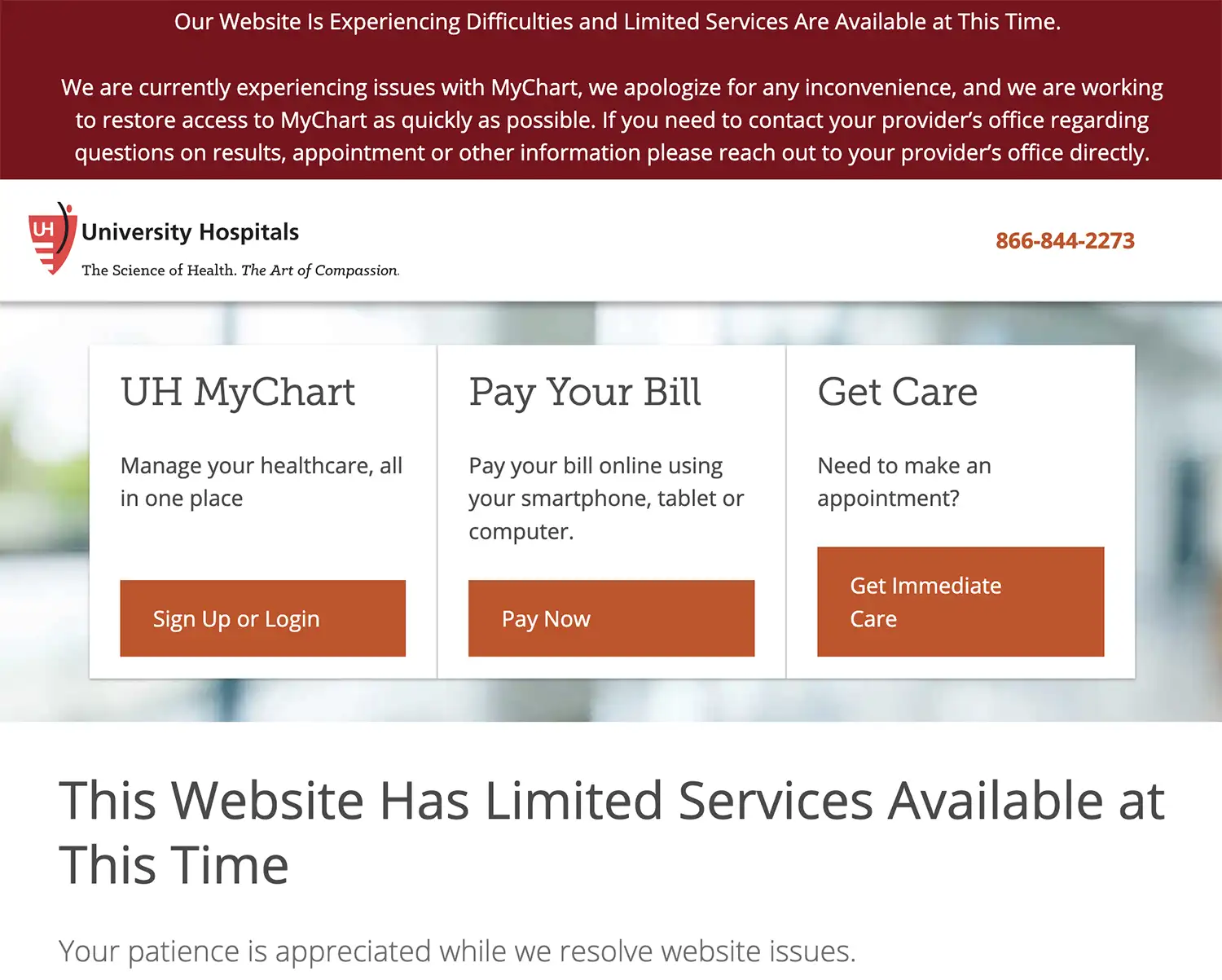
People seeking to schedule appointments were asked to call an alternative phone number. The site also listed telephone contacts for patient referrals, transfers and billing questions.
MyChart normally lets patients access health information, make appointments and communicate with their care teams.
UH first reported internet connectivity problems affecting multiple systems Thursday, before disclosing the unusual server activity Friday. UH told WJW it was working with outside experts to determine the scope and effects on hospital and outpatient operations. It has not identified all affected systems or facilities.
The nonprofit health system is based in Cleveland and provides hospital, outpatient and physician services across Northeast Ohio.

Chip in once
If this reporting helped you, a one-time tip helps cover hosting, tools and future investigations.

Support us monthly
A small monthly pledge keeps independent coverage and our reader tools online for everyone.
The interruption follows a similar patient-portal shutdown reported by DysruptionHub this week. Parkview Health, which serves Indiana and Ohio, disabled its network after detecting suspicious activity, interrupting MyChart access. Its website said Friday that messaging, prescription refill requests and scheduling had returned, while billing and video visits remained unavailable.
UH has not characterized the unusual server activity as a cyberattack or publicly identified ransomware or an attacker.
Cleveland.com reported that UH had not said whether patient information was accessed.
Whether the activity exposed patient data and when all digital services will return remain unresolved.


