

JPS Health Network said it remained in a “controlled network downtime” Thursday, leaving technology systems unavailable across its Fort Worth, Texas, hospital and clinics while staff used manual procedures and patient care continued.
The prolonged disruption and reliance on manual procedures raise the possibility of a cybersecurity incident. JPS has not identified the cause or said whether malicious activity is involved.
The disruption has persisted since at least Monday at the Tarrant County Hospital District, which operates JPS Health Network, including a 582-bed hospital and more than 25 community-based clinics.
JPS first publicly acknowledged the disruption Aug. 3, saying an outage was affecting several patient resources, including online services and phone lines. By Aug. 4, the health network was describing the situation as a “controlled network downtime.” The wording does not identify the cause and is not a standard technical term for a particular type of outage.
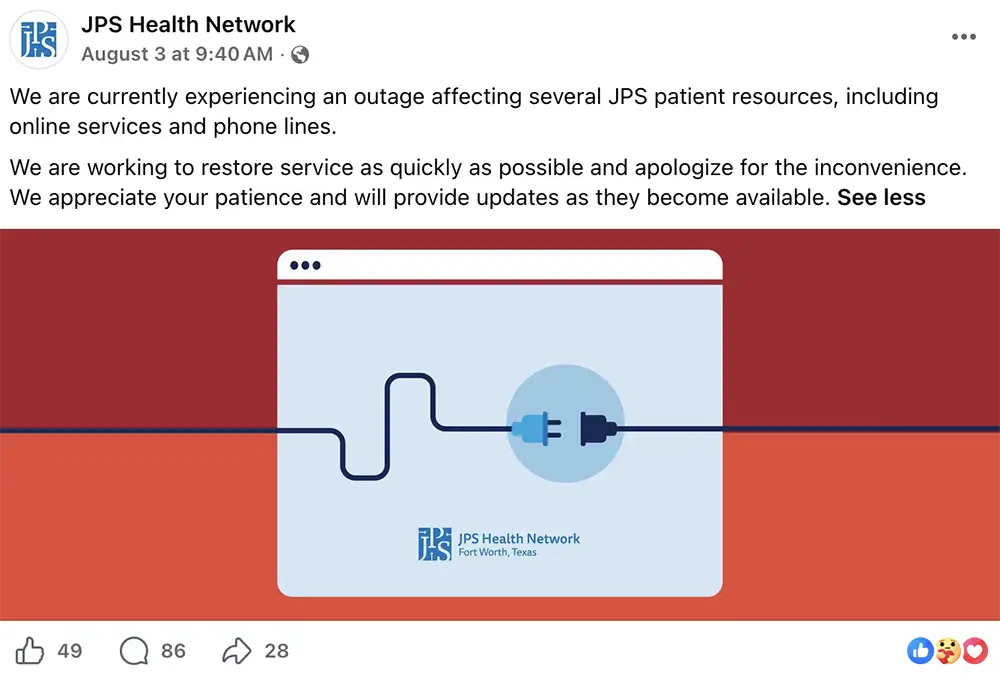
JPS said technology systems remained unavailable and staff were using established downtime procedures and manual processes. The hospital, clinics and other care locations remain open, according to JPS, with physicians, nurses and other staff using downtime procedures to continue providing care, including in pharmacies and other patient care areas.
Some services may take longer than usual, and patients whose appointments require adjustments are being contacted directly by their care teams.
The outage is also affecting the hospital district’s ability to meet public-records obligations. In a catastrophe notice filed Thursday with the Texas attorney general’s office, the district suspended processing of public-information requests from Aug. 6 through Aug. 12.
“Our network is down,” the filing said, adding that the district was unable to respond to requests. It did not identify the cause of the outage.
As of Thursday evening, JPS had not described the outage as a cybersecurity incident, ransomware attack or other form of malicious activity. Neither its incident notice nor the state filing disclosed unauthorized access, data theft, a ransom demand or involvement by a threat actor.

Chip in once
If this reporting helped you, a one-time tip helps cover hosting, tools and future investigations.

Support us monthly
A small monthly pledge keeps independent coverage and our reader tools online for everyone.
Similar prolonged technology outages at other health care organizations have preceded later confirmation of cybersecurity incidents. In 2025, Heywood Healthcare in Massachusetts initially described a multiday disruption as a network outage before identifying it as a cybersecurity incident. In 2026, Michigan’s Cherry Health initially disclosed broad technology problems before confirming unauthorized network access nearly two months later.
Those cases do not establish that the JPS outage is cyber-related, but they illustrate that the cause of a significant technology disruption may not be disclosed immediately.
DysruptionHub had identified no ransomware or extortion claim tied to JPS in public sources as of Thursday evening.
JPS has not announced a restoration timeline. Its hospital and other care locations remain open, but technology systems remain unavailable and the cause of the disruption has not been disclosed.
JPS did not respond Thursday to an email from DysruptionHub seeking additional information about the outage and its cause.


